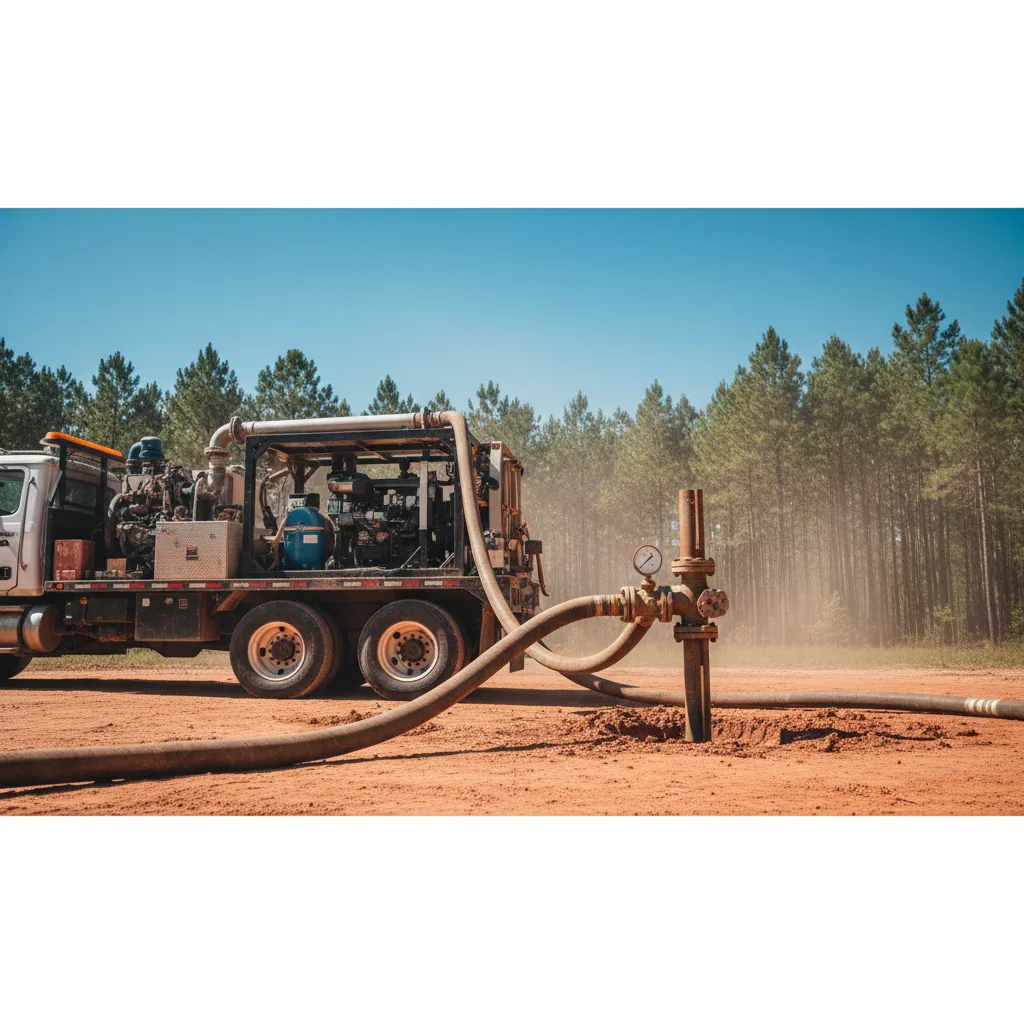
Hydrofracturing in Dublin, GA
Low water pressure from well or a well running dry? Well hydrofracturing uses high-pressure water injection to open existing fractures in bedrock and restore well yield — often at a fraction of the cost of drilling a new well in Laurens County.
Get Free QuoteWell Yield Improvement with Hydrofracturing in Laurens County
Hydrofracturing (also called hydro-fracking or well rehabilitation) is a proven technique for improving water yield in low-producing rock wells. Dublin Well Drilling performs well hydrofracturing throughout Laurens County, Dublin GA as an alternative to drilling a new well — we assess your well first to determine if your formation is a good candidate. Many homeowners in Dublin, East Dublin, and Dexter have restored their well's flow without the expense and disruption of a new well.
The Process Includes
- Pre-treatment yield and flow rate assessment
- Downhole inspection to confirm rock formation suitability
- Inflatable packer installation to isolate fracture zones
- High-pressure water injection (500–2000 PSI)
- Post-treatment flow rate measurement
- Water clarity test and well disinfection
- Documentation of before/after yield improvement
How much does hydrofracturing cost in Laurens County?
Hydrofracturing in Dublin, GA and Laurens County typically ranges from $1,500 to $3,500 depending on well depth and number of fracture zones treated. This process uses high-pressure water injection to open existing fractures in bedrock, which is common in areas with hard granite or dense clay layers found throughout middle Georgia.
Why Hydrofracturing May Cost Less Than Drilling a New Well
Often More Affordable
Hydrofracturing a low-yield well typically costs significantly less than drilling a new well. For the right formation, it can deliver dramatically improved yield at a fraction of the cost.
Fast Results
The treatment itself is typically completed in a single day. Post-treatment flow rate testing is done the same visit, so you know right away whether the well responded.
No New Well Needed
If your existing well casing and location are suitable, hydrofracturing preserves that investment. You keep your existing pump, pressure system, and plumbing — only the yield changes.
Honest Candidacy Assessment
Not every well is a good candidate. We assess your well first and tell you honestly whether Laurens County hydrofracturing is likely to help — including when low water pressure from well issues has a different root cause entirely. If it won't work, we'll say so.
Our Hydrofracturing Process in Laurens County
Assessment & Well Pull
We start by measuring your current flow rate and pulling the pump to inspect the casing and downhole conditions. Hydrofracturing works best in competent rock formations — we'll confirm suitability before proceeding.
Pressure Treatment
Inflatable packers are set at multiple zones in the well bore. High-pressure water (up to 2000 PSI) is injected to open existing fractures in the bedrock and connect new water-bearing fractures to the well.
Test & Restore
After treatment we measure the new flow rate, flush and disinfect the well, reinstall your pump, and confirm the improvement. You'll leave knowing exactly what yield to expect.
Hydrofracturing FAQs
How does hydrofracturing improve my well?
Is hydrofracturing the same as oil and gas fracking?
Is my well a good candidate for hydrofracturing?
How much does hydrofracturing cost vs. drilling a new well?
What if hydrofracturing doesn't improve my well enough?
How long does hydrofracturing last?
Who offers hydrofracturing services in Laurens County?
We Serve Dublin & Laurens County
Request a Free Well Assessment
Ready to get started? Fill out our quick quote form and a Dublin Well Drilling specialist will contact you promptly. Serving Dublin, GA and all of Laurens County, Georgia.
Get Your Free Quote →